Monday, 27 April 2015

Watch out for superheroes: Royal Holloway Features in the new Avengers movie 'Age of Ultron'

Next time you visit Royal Holloway's campus - watch out for superheroes of the Marvel kind.  


College PR has just announced, following an understandable tight commercial communications embargo, the following; "We can now reveal that audiences watching the newly released film Avengers: Age of Ultron will recognise the iconic Founder’s Building at Royal Holloway University of London which takes a star turn in one of the scenes."

"Royal Holloway appears as itself, with a caption showing the location, placing us firmly in the heart of the story. The scene shows Thor, played by actor Chris Hemsworth, pulling up in a car outside and walking towards the west side of the Founder’s Building, where he meets the character Erik Slevig (Stellan SkarsgĂ„rd)."


One staff member tweeted "@RoyalHolloway how in the seven hells did you guys keep Chris Hemsworth at RoHo a secret?! He was literally steps from my room in Founders." — cemmerz (@Cemoshing) April 24, 2015

Royal Holloway marvels in superhero feature


The iconic Founders building, which carries the informal Harry Potter inspired moniker 'Hogwarts' has featured in a number of films, including Basic Instinct 2 and the popular upstairs downstairs costume drama Downton Abbey Christmas special.

MBA Director Justin O'Brien said "It's absolutely marvellous to see Royal Holloway's beautiful campus feature in a blockbuster movie."

Avengers: Age of Ultron is the sequel to the 2012 film The Avengers, and also stars Robert Downey Jr, Scarlett Johansson and Idris Elba.

Royal Holloway also topped the tables recently for being the safest UK campus, according to this Telegraph piece.  

Monday, 20 April 2015

Global citizens speaking in tongues & why text speak is dead ?


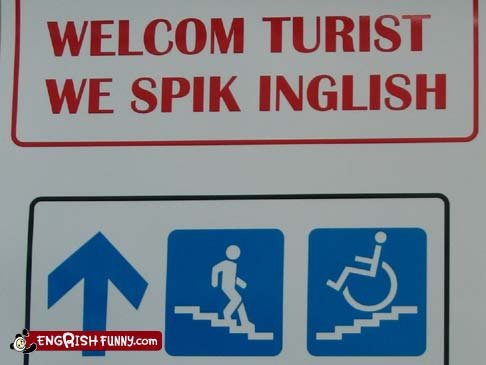
Where is the English language rule book ? Although some like Erica Blexley note value in teaching university entrants grammar, I find working with global citizens encourages a pragmatic view that what is important is effective communication, rather than zealous adherence to a poorly defined, conservative and socially divisive code. You feel me ?  Ben Ambridge seems to.  


 Speaking, ok, but writing ?  From funnyjunk.com


I was taught not to space before a question mark, although Bill Gates keeps telling me this is just plain wrong with a line of red dots. I think words like internet should only have capitals when commencing a new sentence. I care little that practice is a noun and practise the verb form, when they work just fine inter-changeably. The passive UK writing style our students are encouraged to adopt is not much liked by west coast word-processing coders.  Apostrophes, except the one in my last name, are best avoided, they just slow your typing down. 

'Engrish' powers international trade


The good news is that language accuracy seems to matter less these days, particularly if you operate as a global citizen and immerse yourself in a social media world, beyond the Word spell checker, that tolerates volume for quality and plays rather fast-and-loose with that elusive rule book. Stewart Riddle notes the growing power of English for international trade, with its precarious multi-local variants and that four-out-of-five English interactions are taking place between non-natives.  It is also a world, thanks to Web 2.0 and mobile devices, where the spoken word and powerful infographics are becoming increasingly prevalent. 


If only more road signs were this seductive ?   thepinkcityandme 


Inspite of influential texts from the likes of Lynne Truss, self proclaimed spelling bee, and the historic efforts of new world radicals behind the Carnegie funded 1906 simplified spelling board reform, supported by one Theodore Roosevelt, that brought  some more logic to the western Atlantic language.  By dropping redundant vowels (e.g. behavior/behaviour) and improving letter orders (e.g. centre/center) the command to "write or speak in English" is not as clear cut as it might first sound. Which English do you mean exactly ?


"Proper English" - what is that ?


Thanks to Hollywood's cultural prowess I understand 'morican and television soap Neighbours tuned my ear to Australian-English. However, I was surprised to hear an international student say that they found non-natives easier to understand speaking English.  I guess there is logic of mutual appreciation of the communication challenge, fewer colloquialisms and perhaps slower, clearer delivery. Brits often clip important vowel sounds that even Americans find challenging.   I love the literally infused Indian-English that retains the Shakespearian  evoking thrice and the anticipatory pre-pone that complements the over used post-pone term. Should the international standard rather be dubbed English linguas francas ?  Ironic note: what is the English for lingua franca ?


Campaign to re-introduce 'thrice' begins... hashtag THRICE ?


Being told recently in an academic journal submission rejection that 'p.a.' is an abbreviation for per annum that the average person would not be expected to understand was amusing. Really ? My usual refrain when I smell inappropriate moral conservatism is to make up Bardian sounding quips like "Ye thou thinkest wyth stynking pot uponeth thy headde." Yay.  Although Ye (olde shoppe) I think meant 'the' and only latterly have I appreciated the nuanced class struggle interplay between usages of thee and thou, formal and familiar terms for you in old English. The idea being to emphasise the ever moving nature of language, its role to enable effective communication (across time and space) and not to discriminate between those with and without an expensive native English education.

Text speak is dead ?


As a young graduate trainee in the airline industry I was introduced to TELEX speak and TLAs, practical shortenings, I was told that saved money on one of the pre-internet global comms networks that charged per character. We used two and three letter codes (Three Letter Anachronisms) and abbreviations that meant "txt spk" when it arrived, was already second nature. During our training we were challenged to make words up from airport city pairings, like MANDUB and PERLAS (Manchester-Dublin and Perth-Las Vegas). I enjoyed the mirth generated when one of my successful business cases justified flying into FUK (long oooooh vowel, please) code for Fukuoka, Japan and heading on holiday to the Thai beach resort of Phuket (HKT). Colleagues would have secret conversations using pseudo flight bookings PNRs, (Passenger Name Records) that has echoes of tor, the dark net, that is popular amongst the paranoid and criminal keen to avoid Big Brother oversight. TELEX speak was always in uppercase capital letters, not unlike the lowercase only internet, which also does not recognise the special characters that makes spelling my last name difficult. If only Sir Tim had been called O'Berners-Lee ?


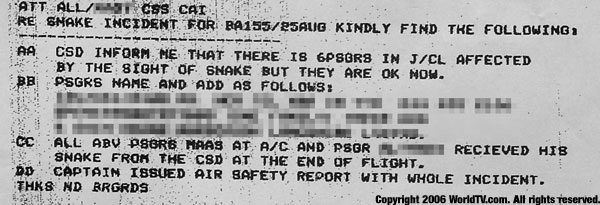
It is on the telex machines that I picked up, and continue to use, terms like KK (confirm), NN (need), the message sign off BRGDS (best regards), affectionately informal TTFN (ta-ta for now) and PAX, the Romanesque curtailment of passenger. Ave Caesar ! You will now be able to understand this code string, NN 4PAX 01APRLONLOS, as a request for four seats on 1st April on the flight from London to Lagos. Simples.

"Snakes on a plane telex" linked from alxklive.com


Email killed facsimiles and my beloved TELEX of course, as smart phones and social media now prevail over email, which remains only popular with the older generations.  Rather counter intuitively Nenagh Kemp's (University of Tasmania) research on exposure to texting, found it was a signal of better literacy skills. LOL. Of course, I read LOL as the inappropriately affectionate Lots-Of-Love, not its current meaning Laugh-Out-Loud. IMHO according to my new BFF Josh, Txt spk is ded2.  Predictive text seems to be evolving our language again, gone are traditional spelling mistakes, replaced by sound-the-same homophones and random error words thanks to the poke yoke data input accuracy afforded by tech that does not hold efficient textisms in its default US infused library. 


But even this may not last for long, as dictation, voice interaction services like Siri and Cortana, video conferencing and the stark growth in image and video based information sharing take centre stage. Check out the image and video rich bbc.co.uk and theindependent.co.uk and ask the question: Are traditionally text reliant academics like myself looking at the post meteor fall out dust, like the dinosaurs did back in the day ?


How long will it be before a tech start up, perhaps dubbed Turnitaround, offers this new, robotic revenue stream service ?  "HAL, write my 2,000 word marketing plan for Justin O'Brien using Azerbaijani inflected English, 75% please."


Tuesday, 17 March 2015

Book review: How to reform a Business School – the Ivy League way


Ashish Jaiswal: Author

Ashish Jaiswal looks at MBA curriculum reform using a case study approach, given my own blogging and publishing interests on two topics close to my heart it is not then surprising to hear that the publishers contacted me offering a review copy of the text. Up front ethical disclosure covered. 

The text uses a recognisably academic research paper structure that is peppered with in text referencing which might not be to everyone’s liking, but a number of chapters stand alone on their own (case study method, curriculum history and MBA reform) and might be interesting to dip into thus. A useful read for business school professionals in management roles, there is a solid warts-and-all consideration of the MBA proposition, highlighting its rather controversial position in academia, with its predilection for drawing on un-evidenced popular normative industry publications. 


There is a detailed explanation of the experiential-versus-evidential approach to publishing research and industry management thinking. Whilst the critical academic put down ‘airport book’ is unpacked, more could have been made of ivory tower research methodological shortcomings and communications effectiveness, I feel. 


Using a detailed longitudinal case study of the Yale MBA the reader can gain helpful insights into the evolution of the infamous business masters degree. The north American MBA is quite different from the European model I know, spread over two (more costly) years, it offers a general introductory first year, summer sandwich internship filling and elective specialisms in the second year. European MBAs tend to require significant prior work experience and study is full time over a single year. Additionally it is hard to find other specialist business masters programmes stateside, thus underscoring the point that there is not a single homogeneous MBA format. It also helps explain the frequent US conflation of the notions of business school and MBA that are quite distinct in my mind.


Those from outside the sector might enjoy appreciating some of the challenging so-called democratic and consensual decision making strategies required in a community of head strong individuals who value their right to free speech. 


I wish I benefitted from this 2015 publication earlier, having just endured a years long and fairly arduous silo busting MBA curriculum redesign as lead, but I did feel comforted that many of the stages put forwards in the concluding theoretical contribution were elements I had indeed put in place in my own change programme. 

 Ideal reading for the rookie MBA Director and reflective business school Dean.

Monday, 9 March 2015

Stop Killing The Audience ! 10 presentational Do's and Don'ts

I started my professional career as a back room boy painstakingly printing out colour acetate sheets (for now defunct OHP, Over Head Projector if you are a Generation Y)  using Harvard Graphics software (stuff you would call an 'ap' these days I guess) on a funny and very expensive printer that seemed to draw beautiful lines in blue, red  and green using little paint pots controlled by a tripod mechanical arm.  Perhaps capable of spewing out three or may be four slides an hour, effectively two by the time you had spotted errors and thrown away the badly printed ones, this was a painstaking endeavour.  These days of course nearly everyone has access to PowerPoint, with its amazing array of templates and drop ins that appear to idiot proof information visualisation.  

I've just come out of the pool after a modest work out that affords me considerable thinking time and the idea of a post on presentation skills on the topic of avoiding 'Death by PowerPoint' came into my head.   I guess brought on by the (taken very much in my stride) presentation hiccup I did last week to Sian and her colleagues on the new MBA design. It was all set up and planned for PowerPoint - but didn't happen because the room we ended up in didn't have a computer.  So I had to revert to the old fashioned method of standing up and talking, an approach that I have been engaging with actively over the last year.   Those in the know call it 'flipped classroom' - essentially  you skip the lecture by inviting students to read the theory before hand & spend contact time discussing the content and looking to use the ideas, powered by the ever-so-old fashioned engine of conversation.  

During the end of term and end of year period I observe many different student groups present.  One recently saw not only some jolly positive feedback, that was well earned, but also some more to the quick feedback that reminded me of the 'gold standard' and perhaps the value in reminding presenters of good practice using a pithy bullet point check list. 

Now, without further ado, I will offer up my 'Avoid Death by PowerPoint: 10 Do's and Dont's' 

In good positive thinking mode, Do's first;

Do practise your presentation.  I used to turn up my talk radio station very loud and see if I could concentrate whilst over talking the radio.  It helped build volume, focus, and identify any tricky ideas that I couldn't explain.   It would also highlight words I struggled to say confidently and reminded me about breathing.  Around one in five presentations has a major technical hitch, a missing memory stick, a crashed laptop or failure to connect to the screen projector.  An absolute must is to take the stage, do a volume/reverberation check and get the feeling for the space (even if it is eerily empty).  

Do use pictures.  They paint a thousand words.  They can intrigue and stimulate the audience.  They can remind you of a key point or story that you need to tell, but do not have to be literal. 

Do plan your message.  A consultant in Sweden, Jon Haag, shared a neat model I like.  He recommended three simple elements in a pitch (1) Title.  (2) Problem. (3) Solution.  I have seen quite a few clever people lose impact by failing to adhere to this approach.  

Do keep to time.  Always agree what the time available is and what the agenda for the meeting is going to cover.  Experience suggests that short, focussed communications are more effective.  Having an audience eager to invite you back for more detail or further discussions is the aim.  Thus target shorter and sweeter presentations, allow Q&A time to cover points of specific interest (as defined by the audience, not you !).  We have seen someone lose a job offer by failing to heed messages to stop over running.  

Do ask for feedback. You don't always ace it, and you will not hear the behind your back utterances and muttering when you have performed poorly.  Whilst online surveys are now beyond annoyed.com frequency asking for soundings from participants on what they felt of the presentation, what were the key points, where there things that didn't come across or work so well is a great strategy.  Right after the session, in person - you can read a lot into body language & what is not said.  One of my colleagues even follows social media (Twitter) after his lectures to get a feel for what students felt.  Brave.


And a few Dont's;

Don't use black text on a dark background, ever.  It works on a bright flatscreen, but when projected in a larger room you can't see the black.  Remember, black is the lack of light & is very reliant on an appropriate contrast being achieved.  Light on dark is best and try it for visibility from the back of the room you are  using.

Don't read (or write) slides word-for-word.  The audience scans the text quickly, pulls out the interesting content & tunes out to  your voice as  you drone on about stuff they are no longer interested in.  In the new world everyone is comfortable working from Google glass heads up displays, multiple monitors in their work stations and one or two (iPhone and iPad) hand held screens.

Don't use too many words.   Received thinking suggests 16 words (yes, SIXTEEN) per slide is optimal and no more than three font variations (where bold, size and italic are each variations).   Remember, visual aids are just that, assistance for the speaker to put across an effective, powerful message or help tell a joined up story.

Don't forget to look at all your audience.  Concentrate on key stakeholders, look for cues in their body language - are they bored ?  short of time ? struggling to hear ?  If you can't meet the audience eye-to-eye - go for the forehead or mouth, since you won't be kissing them and are a few metres away, they won't notice the difference.  Gaze aversion is very natural (it shows you are thinking) but try to work your attention around the room (S-L-O-W-L-Y) to connect with each individual.  

Don't use too may flashy bits.  Whilst it is tempting to introduce sound effects and use amusing animations, these are now universally understood and available.  Legendary French singer Edith Piaf (roll your R's around the refrain "Rien de Rien") used to adopt a single gesture for each of her songs and this seems a good maxim, less is better.  A slick embedded video that auto plays can be very effective.  A self timed slide run enables the speaker to concentrate on putting across the message and be the centre of the performance, good.  But too much fizz and bang can be distracting.  Software like Prezi can bring exciting multi-media feelings to slide transitions, but inhibits back tracking and requires more complex linking that may get in the way of a content heavy message.


Friday, 6 March 2015

UBC semi-finals 2015

Royal Holloway has two groups in the semi-final stages of the prestigious Universities Business Competition (UBC), from the management and economics schools.  


Dr Boyka Simeonova specialist in Knowledge Management at the Royal Holloway's School of Management reports (nearly live) from sunny Bristol:


Early doors..

"And we start with two pictures of the university of Bristol in sunny Bristol and the countdown of the first task. The surrounding is beautiful, the atmosphere is great and the teams have their creative hats on."


Students work in groups, iterative decision 'rounds' mimic the business cycle

Mid-morning update

Two teams participate at the UBC semi-finals this year. There is a great team spirit and teamwork. Here are some pictures: the teams are ready for their next task.


  Royal Holloway Students Suited and Booted 
- are those really ties ?

Team spirits running high -  Free Hugs !


The current scores are team 38: 121, team 42: 129. This places them in a good position in the competition but they need to work very hard in order to secure a place in the final as the top score is 144. 


After lunch - scores on the doors


The teams are ready for new challenges following a hearty lunch. The next task is the elevator pitch. Time to put the creative green hats on!

Management student Nigar Rustamova shares "This is a great learning experience especially in terms of getting a greater understanding of different aspects of running a business. The challenge also stimulates teamwork and taking decisions under time pressure."


Boyka is clearly loving it !


Time is going fast at the elevator pitch, pictures attached.

The results were announced after the pitch and sadly the two RoHo teams did not win a place in the grand final 10, unlike last year.

Here is what the team members shared after the challenge.

Philipp Fuhr comments after the challenge: "It was a valuable experience from which we learned a lot. And we are definitely going to come back next year." 

Despite the result, Nigar Rustamova shares that: "I really enjoyed it."

This is the end of the live coverage.


Blog authors at Royal Holloway:  Justin O'Brien and Boyka Simeonova

Friday, 27 February 2015

Entrepreneurs go bananas !


As another example of hands-on learning approach that entrepreneurial students favour, this weeks class of Royal Holloway MSc Entrepreneurs enjoyed considering the consumption of bananas and the business opportunities that might be available in this space. This week studying entrepreneurial marketing with MBA Director and marketing specialist Justin O'Brien students were pleasantly surprised when they found a number of bananas on the tables in front of them. Justin is a strong proponent of 'fun learning' as evidenced here at the Chocolate Factory,  with bananas offering an 'out-of-skin' learning experience.


Having escaped the ridiculous regulators of the European Union (who sought to standardise irregular fruit and impose norms of straightness and minimum length @14cm) European consumers are now free to enjoy bananas with abnormal curvatures, whatever that means ! Although relatively high in carbohydrates, bananas can form an important part of a balanced, healthy diet.  Popular with kids, as they are easy to open (unlike oranges) and kind to rupturing gums and milk teeth (unlike hard apples), the big challenge for bananas, with their in-built natural wrapping, is bruising and the risk of total mush-down. 

Creative advertising conceptualisation
Inspiration for the case study came when a highly entrepreneurial close friend of Justin, who has family in Canada, was offered the UK franchise for a new product in 2005. The highly engaging and interactive case study used real bananas and students were able to inspect examples of version 1 and 2 of the innovative banana guard proposition. The case provides students with the chance to consider the optimal marketing mix that would optimise value from such an opportunity; could revenues confidently exceed significant sales, marketing and operational costs ? 


Students considered Everett's innovation diffusion 'early adopters' and how direct sales at consumer events like the Ideal Home Exhibition and PR through lifestyle magazines could be used to generate sales using premium pricing and innovation appeal in the first year, followed by a lower price skimming approach once the novelty impact had worn off. 

B2B approaches of using a co-branded guard (leading banana company Fyffes, Del Monte or food retailer Sainsbury's ?) might see the modestly priced, but emotionally appealing, consumption enhancing  merchandising item capture additional channels-to-market. Costing around 0.87 Canadian Dollars to produce and retailing for between £4-£7, competitively priced imitators quickly followed on.

Using a relatively simple product proposition, the banana guard case study offers  up a number of positive and negative promotional associations that are considered against key contextual ideas such as healthy eating, convenience, well being, fun, children friendly and humour (but not sexual innuendo).

Students working in buzz discussion groups were invited to identify the key market segments, noting the features and benefits of the banana guard. 
School children's lunch boxes and sporty types were selected, although images with fit and healthy attired individuals eating bananas were found to be a difficult creative conceptualisation. One image concept, that was highly suggestive, was used to provocatively consider the ethics of overt and over sexualisation in the context of what might be considered good taste or appropriateness, in a  brand that had children and parents firmly in its sights. Edgy companies such as Ryanair and Bennetton have persistently used highly controversial images to give their advertising 'outrage' PR amplification. 

Product line innovator Banana Guard also now offer related, branded solutions, with amusingly names such as; 'Froot guard' and 'Froot case' for other fruit shapes and a traditional bread shaped 'S'wich case', using child friendly primary colours and seeking to expand their product offering firmly in the 'lunch box' marketplace.

Fun learning at Royal Holloway


Monday, 23 February 2015

MBA profile: Prashob Vellalath


Prashob Vellalath, MBA

Coming to London to study for an MBA was an important and tough decision for me in some respects. It seemed like a world away as I had never travelled outside of Asia. However, my overriding ambition was to study for an MBA in International Management and to do this in an international environment. Once I had completed my research into what was best for me, I decided on Royal Holloway University of London. I met with the admissions representatives in Bangalore and felt it was a match. 


Successful scholarship application 


There are many opportunities to receive financial aid for qualified students. Receiving a scholarship was the icing on the cake and solidified my decision to study at Royal Holloway. Without the financial help, it may not have been possible for me to go abroad for an MBA. I agree it is expensive to study in the UK but the amount of scholarship is generous. 


You might ask - do I miss India? I do not need to - there are many international students including many Indians at Royal Holloway –a home away from home! 
Prashob Vellalath

What about the food ?


Indian for me is the best and I found that it is possible to eat Indian cuisine exclusively. Campus offers Indian dishes and London as well as Egham has Indian restaurants. [Editor: Curry is Britain's favourite food] However, I am learning that other cuisines can be equally tasty! 

I am slowly exploring London and it helps that we are in such close proximity as the course is demanding, but on the weekends I look forward to experiencing the rich culture London and the UK countryside has to offer. There are museums, sports, movie theatres and pubs to suit all tastes. There must be thousands of beer varieties to sample, but of course I have only tried a few! 

I have been at uni for a little over four months now and not regretted a single day. The MBA for me is not just about education but also an experience of a lifetime. In this short time, I have learned so much from the professors and guest lecturers from many fields of business. I have a much better knowledge of business from marketing to leadership to finance. 


Did you make friends ?


I have made friends with students from all over the world and from many different backgrounds. I have found a supportive, encouraging and motivating community at the College. I do not live on campus but am still able to participate in a few extracurricular activities. There are many clubs for all student interests. When I can, I play football on campus and the access to attend professional games is easy. I have not yet seen a game but it is on my ‘to do’ list. In the meantime, I am able to watch matches live on TV at much more convenient times.


Royal Holloway MBA 2015


Royal Holloway is more than I even expected and I am very happy with my decision. As far as working here after, it will be a challenge for any non-EU citizen to get a job but not impossible. The College offers careers guidance and exposure to companies. Every year, companies in the UK do sponsor some students from the MBA programme. 


I have learned that ‘work hard, play hard’ is the opportunity I have been given. No matter what future career opportunities are open to me, the knowledge and skills I am learning at Royal Holloway will be transferable for any business path.

Prashob Vellalath, Royal Holloway MBA candidate 2015