Saturday, 20 September 2014

The Zebra Conundrum


Looking at a zebra penned in at a city zoo, it is hard to believe that these beautifully striking beasts are really the product of nature. Fellow captives in the land based animal kingdom sport hues of grey, green and brown fur and feather as camouflage, for both carnivores and the hunted, under Darwin's laws of natural selection, have evolved exterior coatings that draw on a more limited palate. 

"It doesn't it matter if you are black or white"


Genetic mutations such as albinoism (alba=white), alarm colouration (black & yellow) to notify danger and poison like wasps and frogs and distinctive show colours to enable sexual reproduction are the exceptions that spring to mind.

White with black stripes or black with white stripes ?


"The zebra’s striped coat is simultaneously extraordinary and stunning" states the Guardian. link Godlike creations, according to some early naturalists. Current popular belief is that the zebra stripes evolved to offer a disguise on the African grassland savannah, hidden from hunting lions in the long grass at twilight, although Darwin himself was not convinced by this argument. link


Chris Rock voices Marty

To the question of ethnicity and leaning on Michael Jackson's controversial lyric that ironically states "it doesn't it matter if you are black or white" some point to the white under belly to support a case for black stripes, whilst others note the unborn development of white stripes appearing on a dark skin. I am sold on the black, as deeper tissues are reportedly dark and other geographically juxtaposed equine species do not turn out pale.


In our Hollywood celebrity driven culture it is perhaps worth considering role model portrayals and we find that in the DreamWorks animation 'Madagascar' Marty the zebra (or zee-brah), voiced by comic Chris Rock link, has white stripes. So that decides it.

Let us leave paper letter technology in the 20th century


Ironic that in the 21st Century we attach word and pdf documents, cut in A4 sized pages, so they print nicely on foolscap paper (so called after a fools cap water mark was used as an early quality mark, a forerunner of contemporary brand hologram authenticity labels). 
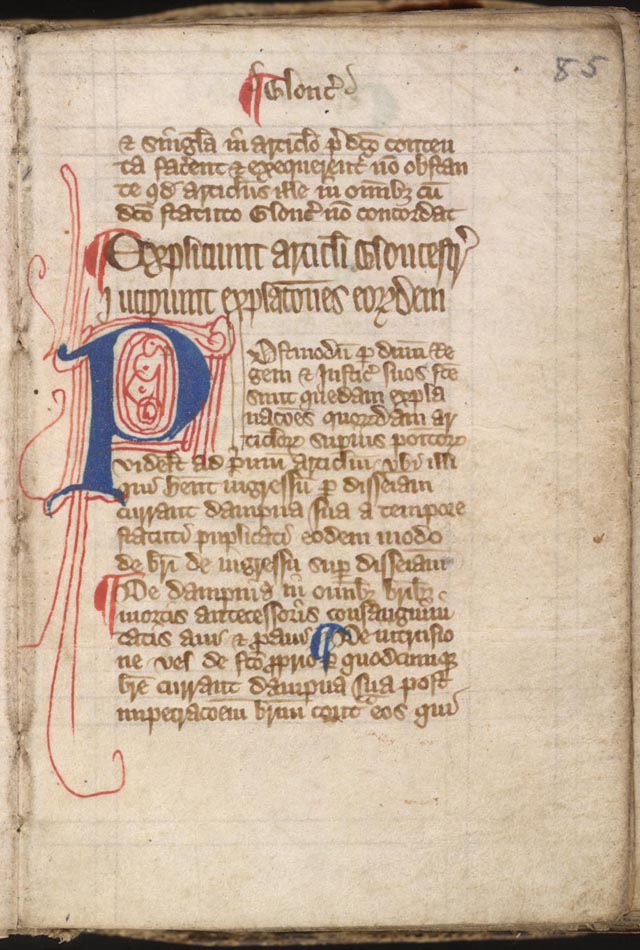

"Today I am adding red flourishes"

Only this week I was invited (with about two days notice) to complete a reference from a cracking student I had the pleasure of supervising during his dissertation. The attachment only really worked if I printed it out, signed it by hand and then scanned it back. Why would you do that ? Of course I would no longer dream of putting it in the post, too much hassle, too slow and hugely expensive - have you seen the price of stamps just soar in recent years ? 


Three emails later, and importantly three days later, I have a word document that I'm meant to type into - although having written text in an email quickly and attempted to write in the distorted .rtf file, I have been very slow at my fourth iteration of this modest endeavour. I bet the cross check boxes are not clickable - such a simple thing. 


So this begs the wider question - why do our processes continue to utilise slick, fast & cheap electronic methods to emulate the historic scratching of dye onto parchment ? I think I might ask uncle Tim at Apple for a papyrus designed gizmo this Christmas, I have already got a watch !

Black is the absence of light


Now for me and my limited science background (I do have to disclose physics, chemistry and maths 'A' levels good enough to get me into Warwick) black and white are not colours, but pure light and the absence thereof. 

We do not see black, but notice the difference around it. Therefore I fail to understand why those clever people in Seattle at Microsoft and others in the silly-con valley (sic) keep writing code that emulates the process, pre-Caxton printing press, that medieval monks would have died for. (side bar: Thanks to Henry VIII many did !). 

I may be biased, as my presentation DNA was developed at British Airways, where the corporate house style always used dark blue backgrounds and a golden yellow font. Is it not crazy that we have to sit in soporifically dark spaces to allow bright light to shine around stuff we aren't looking at ?

Look at the big screen, stupid !


Key feedback I often give to students preparing for presentations is to ensure that their slides work effectively on the big screen. Like zebra patterns, what you see up close may be hard to make out from a distance. 

Using three or less font styles, maximum 16 words and leaning on the old cliche "a picture paints a thousand words" offers an engaging graphic story that compliments rather than replaces the human presentation. 

How often have you skim read wordy slides in a thrice & then been rather bored as the speaker labours painstakingly through each and every point, when your enthusiasm to listen and engage has already dissipated. Better surely to titivate the audience and cover off any missing items by answering follow on questions ?

Justin


P.S. For the record, all my teaching presentations this year (well, nearly all of them) have a black background and use a white font. 


P.P.S. What a quaint idea (post script) from the time when everyone spoke latin, as clearly I am unable to go and revise what I have just written ? - just like the expression of "inking in" a meeting into the diary ! 


The prize for tenacious bloodsucking readers


The answer to the curious question as to why to zebra have stripes ?  Current (from 2014) science thinking suggests that stripes can help deter bloodsucking flies, read the full paper on Zebra stripes here: Caro T et al (2014) The function of zebra stripes. Nature Communications. Published 1 April 2014. doi:10.1038/ncomms4535

Sunday, 14 September 2014

BBC covers Royal Holloway's Polar Bear picture


Recently news arrived that Franklin's ship wreck has been located, whoopee ! With no interesting pictures as yet, I assume, journalistic creativity picked up on Royal Holoway's archivist Laura MacCulloch telling in a lovely human interest story that is one of my favourite college traditions.   

The photo above is one of the more notable images that forms a unique Victorian gallery collection housed in the Founders building, where my office is located. (BBC story link below) My Canadian, arts marketing expert colleague Dr Derrick Chong would usually point out the Canadian flag that is being savaged by the left hand bear, symbolic red of human flesh perhaps ? 

http://www.bbc.co.uk/news/blogs-magazine-monitor-29175003 


The tradition is, that the Franklin Polar bear picture is covered up in May during exam fest, so as not to add additional stress to students taking their final exams. Interesting to note that the hair fashion hasn't changed that much since this black and white photo !


Is the anthropomorphism of vicious polar bears by brands such as Coca Cola appropriate ?
Following media coverage of a pupil on a school adventure to the neo-artic who was killed by a polar bear, I am finding the popular advertising depiction of these impressive beasts as cute and cuddly rather incongruous. In case you are faced by an approaching, hungry polar bear - stand PERFECTLY still - its food tends to run away.

Royal Holloway Picture Gallery in Downton Abbey filming

Oh Yes ! I hear you say - is it the same picture gallery that featured in last years hit ITV Downton Abbey Christmas special as a museum set. Monster super troopers ('big lights' & the inspiration for the Abba hit of the same name) shone down creating an unreal, bright and light feeling that seemed to make it all sparkle. 

With a nearly priceless collection hanging on the walls you might assume that the picture gallery operates as a closely guarded museum. It isn't at all - in fact it has a very central space in College life, that sees it used for exams, graduation, meetings, events, formal dinners and weddings. No dancing or stilettos though !

The history and tradition of the Royal Holloway space is one of the great things about working here - yet in many ways we are a very dynamic, modern university, as evidenced by the ultra modern green sailed facade of the School of Management's Moore building. A bit like Coke's polar bears ?

Royal Holloway School of Management Moore Building


Monday, 8 September 2014

Studying and living with the English

Friday I had a lovely afternoon chat with Chen Mei, MBA candidate for 2014/15 who has been brushing up on her English LINK whilst attending the Royal Holloway pre-sessional and hails from Taiwan.  She was very interested in learning more about UK culture and thus this post is aimed at reflecting on English culture, beyond the stereo types (e.g. fish and chips, London fog) and into some of the harder to access tacit knowledge.  

Chen Mei had read that our number one choice of food is Chinese, I thought it was Indian, with curry being our adopted national dish, thanks to our historic imperial connections with South Asia.  US centric National Geographic LINK suggests roast beef and Yorkshire pudding, which I guess is iconic and a must try experience (you will find sunday roast on the lunch time menus of many pubs and restaurants), whilst suggesting burgers for USA and ignoring the world's most populous country altogether.  

About Food LINK reinforces my view that England's favourite dish has moved away from historically more popular roast beef and fish and chips to embrace Chicken Tikka Masala.  I flagged the fabulous experience of a Sunday lunch visit to Southall in west London to experience India town's (variant of the expression China town ?) excellent and good value for money cuisine.  Our Jain students, who find their religion based vegetarian diet hard to follow in and around Egham, rave about visiting one of the Jain restaurants in Southall.  LINK  

My favourite food is Thai, which is becoming increasingly popular, although recent blog post LINK tells the story of how I can't return to one particular venue in my home village in Sussex.  Pritsana, Royal Holloway MBA 2013/14, was very popular for sharing the outputs of her own excellent Thai cooking, regularly in demand to offer catering for the MBA group social gatherings.  LINK

Our conversation moved on to media and by engaging in culturally grounded popular television can help enormously, not only with language fluency, but also in picking up regional accents (I'm finking (sic) EastEnders (cockney) and Coronation Street (Mancunian) ) and bringing a wider cultural and sub-cultural understanding.  These soap operas (so called because in originating in the 1950's the US popular commercial TV format was often funded by cleaning product advertising spend) are short, content light and easy to follow without necessarily understanding every word, thanks to some bluntly telegraphed visual story telling.  My personal favourite shows include:

(1)  The Great British Bake Off and use imagery to help explain the interactions of the marketing mix in one of my lectures, rivalled only by must see Downton Abbey. 

(2) X Factor for the carefully orchestrated and highly dramatic story telling that is woven into the post production edits, whilst my wife really enjoys BBC1's high kitsch celebrity dance off Strictly Dancing.  

(3) The rest of my family support Manchester City football (my team is Southampton) and we all support Northampton Saints rugby, so we pay a fat Sky premium for live sports channels to catch some of these games. 

(4) Strangely whilst cooking Sunday dinner I enjoy dipping into Countryfile and Antiques Road Show, and finally 

(5)  two US formulaic shows - Glee and Hawaii-5-0.  This LINK flags a number of cult and edgy shows - my latest discovery Cuckoo (BBC3) is missing - but it includes slightly nuts detective Luther, played by Hollywood A lister Idris Elba which I have on DVD and Spooks, a fast moving spy show draws on MI5 as its creative foundation.  

Being a busy hands on dad and hard working academic, I don't find much time for television these days.  

My eldest son doesn't watch TV, like many students who fail to understand the need to purchase a television licence when there is lots of free content on the web using sites such as Vimeo and YouTube.  I also note that most students rarely watch television, perhaps going to a pub to catch a football game, which is at variance to my own student experience.  Our flat (67 Redfern) had a small, CRT colour TV thanks to Randy Mandy, who came from a more affluent background than the rest of us, and we all used to watch the Australian soap Neighbours together (that provided a global platform for the careers of Jason Donovan and Kylie Minogue), which was a strangely cultish thing to do.  Day time TV has developed massively since the late 80's (check out the Jeremy Kyle show), but having been gainfully employed since uni I don't ever get the chance to follow these shows any more.  

The Guardian I have just discovered has a section devoted to TV ratings LINK that makes stories out of the BARB ratings, the market research organisation that tracks actual viewing behaviour in sample households to generate statistically significant national figures.  Relevant and helpful for students interested in learning how to write journalistic stories from fairly dull and predictable data.  Currently the BARB top 5 highlights Bake off, Doctor Who, EastEnders, Coronation Street and New Tricks, but I can only assume that X Factor had not started for that last week in August.  They also offer the top ten show viewing figures by channel LINK which makes for some interesting reading. Come Dine with me is very low brow television that I scorned, but then found strangely addictive.  

Enjoy catching some of these if you are new to UK culture.  

btw - if you live outside UK and are keen on benefitting from UK media output on your computer - subscribing to a UK VPN provider will give you the UK IP address you need to gain access to this content.  

My super colleague in admissions emailed her top show list which includes the following:  The Big Bang Theory (beauty and nerd story), Jerry Springer show (for a laugh) and sometimes some documentaries on Channel 4 ( the weird ones, like My online bride) 
 

Saturday, 30 August 2014

Pushing the employability agenda

Recently I was out for a beer (no photo, obviously) in Richmond with a group that included Albert, who is in advertising media buying and a former Royal Holloway international management masters student.   He was in the process of hiring for a starter position and said something along the lines of "the applicants we have are much the same, all bright, good degree, keen with oodles of motivation and with around twoish years of retail/customer service experience.  The problem is, it's really hard to tell them apart."  
Royal Holloway Ambassadors at UBC

To help reduce the odds of picking the wrong new hire, Albert and his colleagues had devised an assessment centre that sought to assess applicants performance in a group discussion.  Having whittled some down from the plenary session after lunch, smaller group exercises would be used to see how they performed in a problem solving role play.  The kind of thing I regularly get whinged at about, students seem to have an aversion to these kinds of activities, in spite of being told how important they are.  

Key criteria comprised; 
  (1) How do they work along with other people (n.b. team working) and 
  (2) Do they have the likability factor that makes the decision makers want to work with them ?

Reinforcement for me that my mantra of group work is medicine that you don't like the taste of, but believe me it WILL make you better...

Also out for the night was Tina, who studied for the Royal Holloway MBA five years ago,  currently BBC based, she noted that in the media industry it was who you know, how well networked you are and how you get along in a team that were the critical factors in career progression.  (Implicit strong role performance)  She has found that you can turn people off by talking too much about your higher education, and surmised that what is most important is how you draw on the learnings to help drive superior performance your projects and your wider teams goals. 

Sounds a bit like the X Factor, Louis Walsh 110% Irish tones, "I like you", and Simon Cowell assessing the acts likeabilty factor.  Recently I have been putting finishing touches to a paper I have been writing with colleague Donna on Business Engagement that draws on 20 collaborative partnerships with 10 global/local, huge, medium and small organisations.   One of the key benefits of this partnering approach,  that gives students a range of very practical challenges to apply their learning to, are the soft skills and experience gained from confronting problems as part of team.  

This really reinforces the importance of work experience, summer internships and business competitions, like the undergraduate University Business Competition (UBC) I mentor for (picture above)

Royal Holloway MBA students Packaging challenge in Sweden
My new (academic) year resolution, following a request for something similar from Tina and Peter, is using a social media crowd sourcing request for industry 'problems' that can be used for MBA dissertations (due 1 Sep) and my undergraduate marketing plan assignment (due Dec).  I hope that just a painless one page brief, with email contact to help connect valued enhancing opportunities for students to demonstrate practical application of their management learning.  I have been comforted and inspired by MBA Olga who has written her dissertation in conjunction with the exciting Big Data meets UK retailers Demographics User Group.  Examples of companies offering up challenging and sometimes leading edge meaty projects can be found here by way of example.  Do get in touch if this sounds interesting.


Wednesday, 27 August 2014

Signs say look east for your post-MBA career.


Every year, QS Top MBA carry out a survey of MBA employers to find out who’s hiring and where. The 2013/14 survey received 4,318 respondents from companies in 39 countries.


The good news is that there was an overall 14% increase in MBA job opportunities in 2013. The Middle East (21%) and Asia (20%) reported the highest growths in MBA demand. This is particularly led by countries such as India and China embracing the MBA qualification. Recent Royal Holloway MBA graduates have gone on to work in countries as diverse as Peru, China and Saudi Arabia as well as many staying on to work in the UK.
Dedicated MBA career advisor Emma Baker

Since 2011, India has overtaken the US in terms of volume of reported MBA jobs. I guess it’s no surprise then to hear that North America MBA demand was up just 2% in 2013, but the interesting news is that North American MBA hirers are forecasting a 16% jump in opportunities in 2014.

In terms of industries, the financial services sector market is growing again, with an increase of 11% in MBA employment demand in 2013. Consulting and technology companies reported a similar 11% jump in demand last year.

When asked what they look for in MBA candidates, employers say they seek candidates with international experience, combined with strong interpersonal and ‘soft’ skills. In fact, 67% of MBA employers seek international study experience. One of the strengths of the Royal Holloway MBA is the international make up of candidates. This year, students from 15 different countries are taking our MBA programme.

Whatever they decide to do after their course, MBA students have the full support of Royal Holloway’s Careers and Employability Service, with their own dedicated Careers Consultant, Emma Baker, author of this blog entry.


Tuesday, 5 August 2014

Dave's Bowl

I recently undertook some hedge cutting for my mother and the visit was notable for two short stories worth sharing with you all, Dave's bowl and being thrown out of a pub.

Dave's bowl


Dave's Bowl


Californian Dave, who lived just down the corridor from me, was on a University exchange at Warwick back in the eighties.  He visited my folks several times at their idyllic cottage garden in Sussex and got on with them rather famously (I've never been that good at trans-generational conversation making myself).  

At the end of the exchange year Dave needed to down size and kindly gifted me his eating utensils, a matching set of one plate, one bowl, one cup, most likely procured from the Tesco store that was located just off campus.  Gifting or off loading, perhaps a bit of both ?  Of course, after graduation, I left to work internationally (Germany, then Russia) so somehow the bowl made its way back to my parents house.  You can see from the photo above - it is a good size, functional, but neither beautiful nor ugly.  What is amazing about the bowl is that more than 25 years down the track my mum still uses this bowl every day.  She has two or three sets of different dinnerware, all of it more appealing than this particular bowl.  But somehow, this generic, low value item, with a strong personal link to 'cousin' Dave as we called him, has endured, and I was delighted to be reacquainted with it again.

Dave was very instrumental in my life.  Knowing of his programme and insights into various cross cultural challenges ("divided by a common language"), I ended up winning a scholarship to attend University of Illinois in Shampoo-Banana (Champaign-Urbana), three hours dead flat and due south of Chicago, in the American mid-west.  Which lead to working as a travel rep in Italy and joining British Airways graduate trainee scheme and a fantastic 16 year career as a global citizen of the airline industry that included opportunities to immerse myself as an expat in Moscow, Frankfurt, Mumbai and Toyko.

The bowl is photographed on top of a real Mexican blanket, a purchase again inspired by Dave's love of South America (Argentia in particular).  I thought Dave's bowl was the kind of summer blog story I should be sharing with you.  

Link here to Dave's blog


Being Thrown Out of a pub 

On the same trip 'home' (my wife does not like me to refer to the place I grew up in, Sussex, as home)  we were thrown out of a pub.  Being solidly middle class, I don't go to the pub very much.  But in my mum's village the pub we used to hang out in on a Friday as A level students has received an amazing make-over, carries 8 (yup - eight ! that's 5 more than most pubs) real ales on hand pumps and boasts an authentic Thai restaurant.  You know I'm writing and researching real ale beer & the craft revolution in particular,  and love Thai food - so this is an ephiphany that makes choosing this pub a no brainer.

As I have been learning about the ale industry I have discovered most people involved in it are very hospitable.  On our recent MBA Stockholm visit I met up with two independent breweries who were a-maz-ing.  The guys at SAB Miller and Windsor and Eton have opened their doors and generously engaged with my student visit groups.  

The Thai kitchen is excellent, producing beautifully flavoured meals that clearly benefit from a range of fresh, authentic raw ingredients, including generous chunks of lemon grass in the Tom Yum soup.  My oldest son was rapturous about his first experience of a Tom Yum (his usual order is a bland chicken noodle soup).  

Hence we (mum, me & my two boys) wandered around the corner for some tea after blasting phase one of the hedge trimming.  On arrival at 19:10 I opened a tab with my credit card and ordered some drinks.  Having indicated we were looking to eat, the barmaid stated that children weren't allowed in the pub after 20:00, but if we ordered quickly the kitchen would deliver in 15-20 mins and we'd have time to eat and still leave by 20:00.  We ordered quickly, requesting that the kids starters and the adults mains arrive at the same time.  Around 19:50 the starters appeared and at 20:00 the mains were put on the table.  

At 20:15 the self-same barmaid re-told us that children were not allowed in the pub after 20:00 and effectively kicked us out.  I mentioned that our food had not arrived until 20:00, the response "I didn't know the kitchen was so busy".  So it was my fault that I had ordered quickly and got food late ? I should have known.  As it happened we were just about done, and an unusually easy going me had to deliver some blunt feedback around the treatment we had received.  Said barmaid was not subtle enough to come and ask if I'd like to pay the bill even.  I was indignant & now have a major conundrum on my hands  - will I ever visit again ?

Over night and the next morning I was still indignant at being asked to leave, I even took time out to discuss the situation with my customer service oriented wife.  What should I do ?  Wander back down and catch the landlord and explain my displeasure ?  Or call ?   Or better still vent my anger with a damming review on trip advisor ?  Or just fester annoyance and never go back ?  In UK you are allowed to leave your contact details with the business and leave without paying if you believe you had sub-standard service.  Now that is an interesting option !

On reflection, I noted that barmaid two didn't know how to order food on the computer and neither of them knew the barrel size that was supporting the extensive array of real ales (which also included the US 'faux' Blue Moon imitation craft beer that hails (discreetly) from the Coors brewco).  Thus they were probably lacking the appropriate training expected at a restaurant and still on a learning curve for their bar duties.

Blue Moon from Coors: Big corporate credentials obscured


Perhaps the appropriate approach (note that I have not identified the location) that I will take is rather than to rave about the fantastic Thai food and wonderful collection of beers (it included the CHOICE of two summer gold ales) as I have done previously,  I will talk about the poorly trained staff and the bad customer experience I received, despite complaining.  (note, no follow up...).

The next day, on seeing a cutsie "Jars wanted for Jam making, please leave behind the bar" hand written note in said pub window, I swallowed my 'oh - isn't that a nice community request' with the bitter taste of being thrown out two nights before.  

A brilliant experience for the next batch of MBA's methinks, who will be invited to critically analyse two service experiences and perhaps note issues around training, communication and customer service ?


Thursday, 10 July 2014

Royal Holloway MBA - Capstone Consultancy Project


The Royal Holloway full time MBA students completed the final element of their taught programme at the end of June (as I write they are all working hard to deliver an individual dissertation on a management topic of their own choosing).  

Photos below show the MBA 2013/14 cohort delivering their management consultancy group reports in the School of Management and celebrating the successful completion of the formal programme at a sumptuous, off campus garden party.

Module leader Chris Howorth has teamed up with Peter Hay, chair of Norman Hay plc, and his leadership team over the past couple of years to offer challenging live consultancy projects that aim to provide a capstone experience that allows students to put into practise a wide range of knowledge and expertise that has been developed over the preceding 10 months.

Norman Hay plc is a highly successful medium sized engineering business that has particular specialisms in chemical coatings, running significant operations in the automotive, oil & gas and aeronautical industries across the world and boasts factories in Australia, USA, Germany and China.

To help students gain in depth understanding of the Norman Hay plc business, Chris Howorth arranged a factory visit enabling students, working in small groups, to tour the facilities and benefit from the chance to put their questions to a range of managers.  

Students were put under real pressure as their recommendations were presented in front of the entire board of Norman Hay plc.  A number of exciting ideas were put forward for intense scrutiny, and whilst the senior managers were complementary about the insights provided,  they also offered students a number of points of developmental feedback for their final written submissions.